Conviction is how you build a brand from the First Round.
Notes from First Round 2026, an annual showcase where brand designers share the real first-round presentations they made to clients.
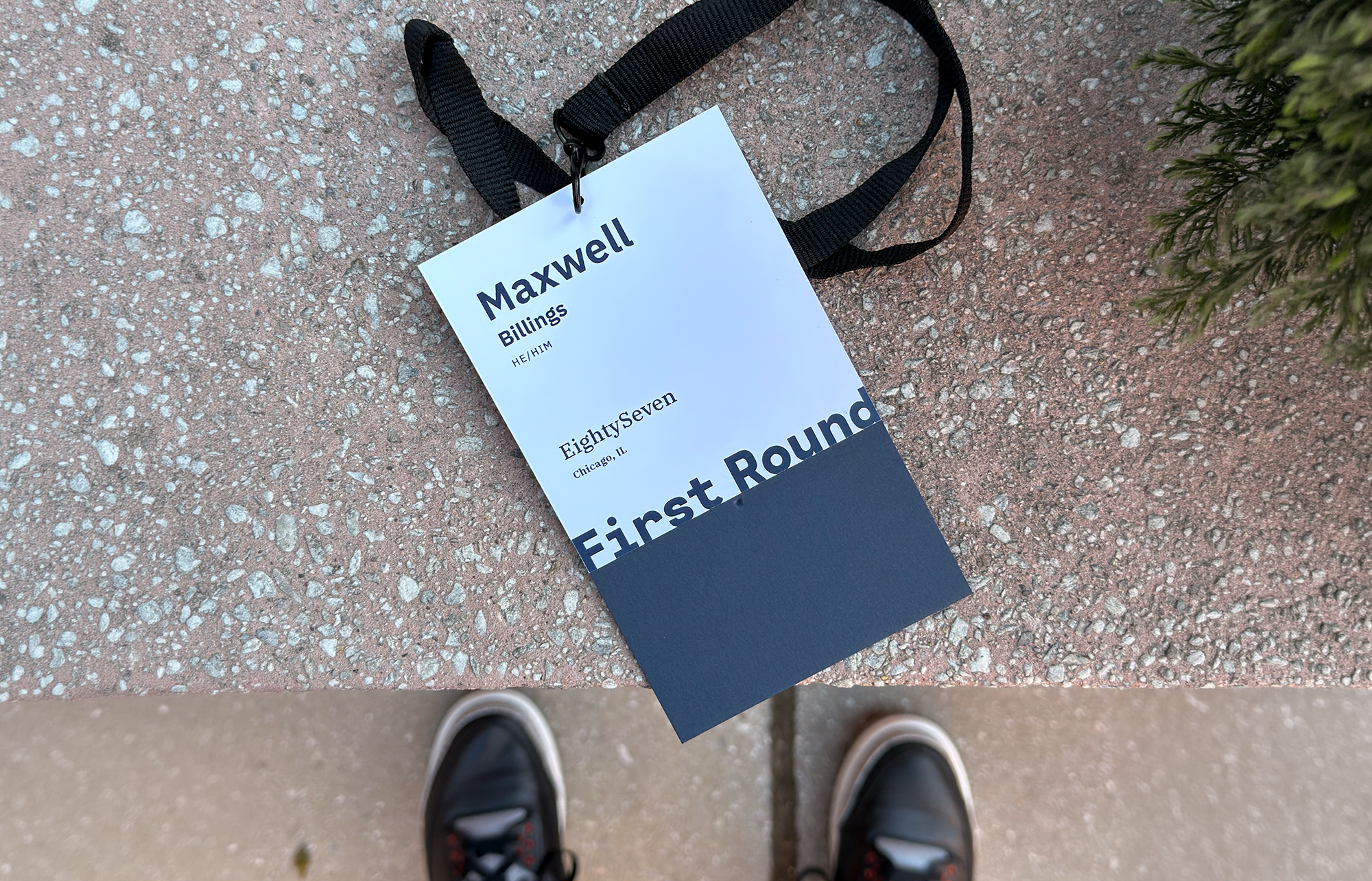
First Round is not a typical design conference.
No panels. No big keynotes. No "future of branding" speculation.
It's one room. One presenter at a time. Each one shares the first-round presentation they made for a client. The real deck with all the behind-the-scenes details. The live tension of that moment.
I've been going for a few years now. Every time I leave, I have the same feeling: a lot of what I thought I understood about branding becomes clearer.
This year was no different.
Difference is not a style choice. It's a business decision.
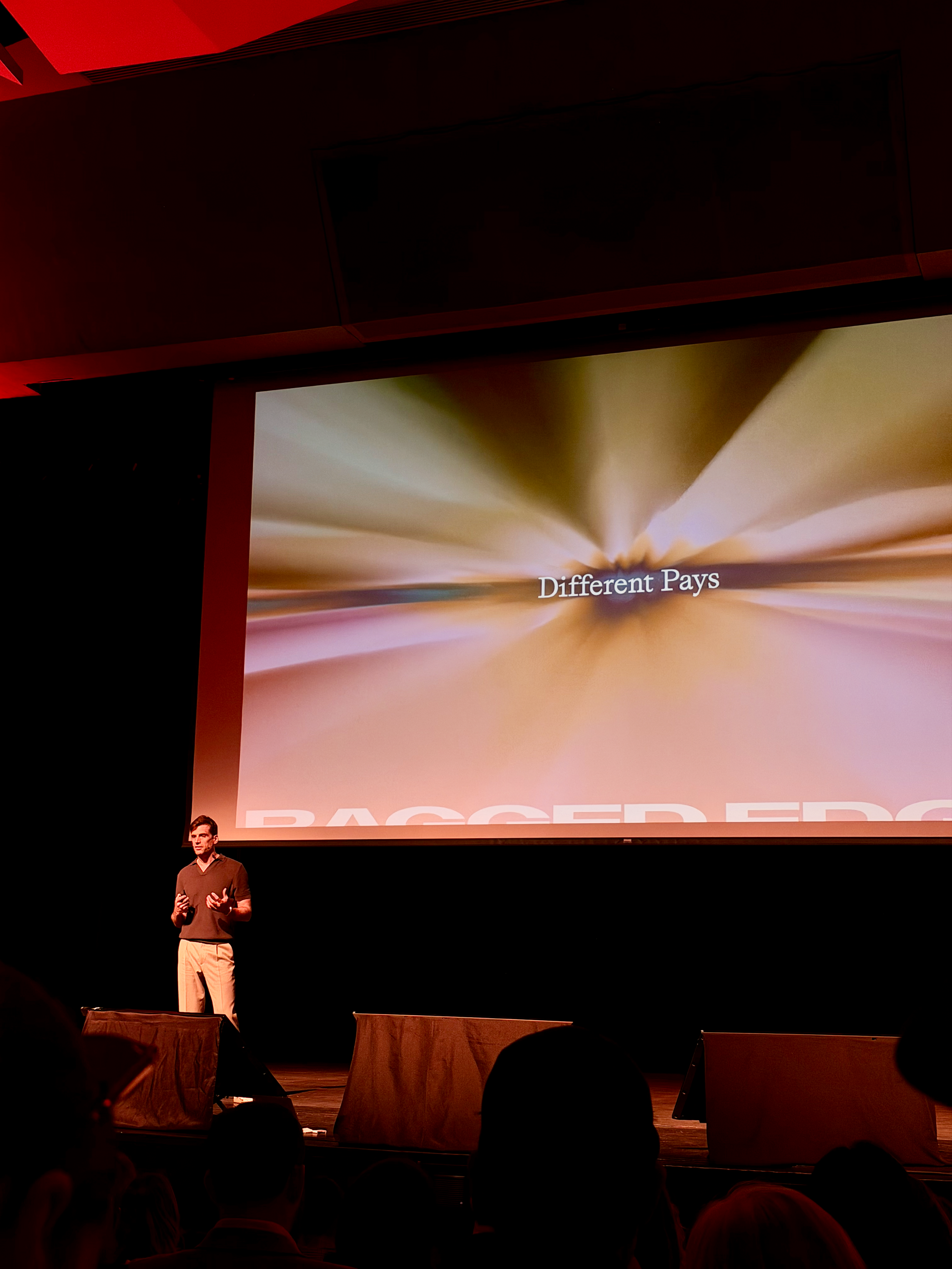
Max Ottignon on presented the Granola rebrand. The internet had a loud reaction when it launched. Some people loved it. Some didn't.
But here's the thing. People noticed. And that's the whole job of a brand.
A brand that blends in gives no one a reason to care. What's different gets noticed. What's different gets remembered. What's different gets chosen.
Founders I work with often want to stand out, but they also want to feel safe. Those two things are in direct conflict. You can't have both. The question isn't whether people will react. They will. The question is whether you have the conviction to stand behind something worth reacting to.
Showing one option is a confident move.
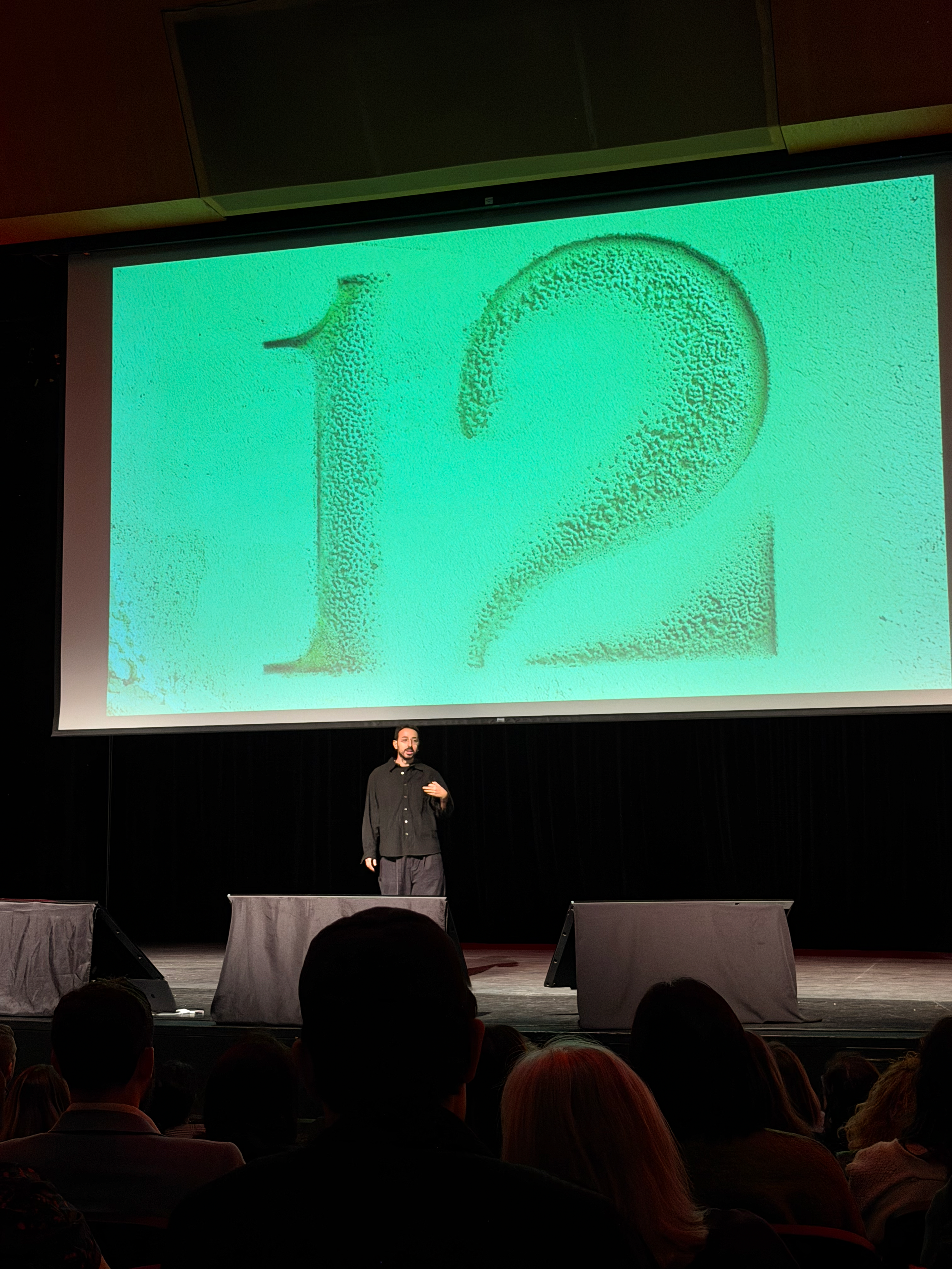
Carlos Bocai presented 12 Matcha and showed one direction.
That sounds risky. It usually gets reframed as a client service problem. "What if they don't like it?" But that's not the point.
When you show three options, you're asking the client to become the designer.
You're distributing the decision instead of making it. And usually, what you get back is a Frankenstein of all three. When you show one direction, developed with real thinking and intention, you help a client see what's inevitable. You're not asking them to choose. You're walking them into the world you've already built.
That's what creates commitment.
Brands belong to people, not just the business.
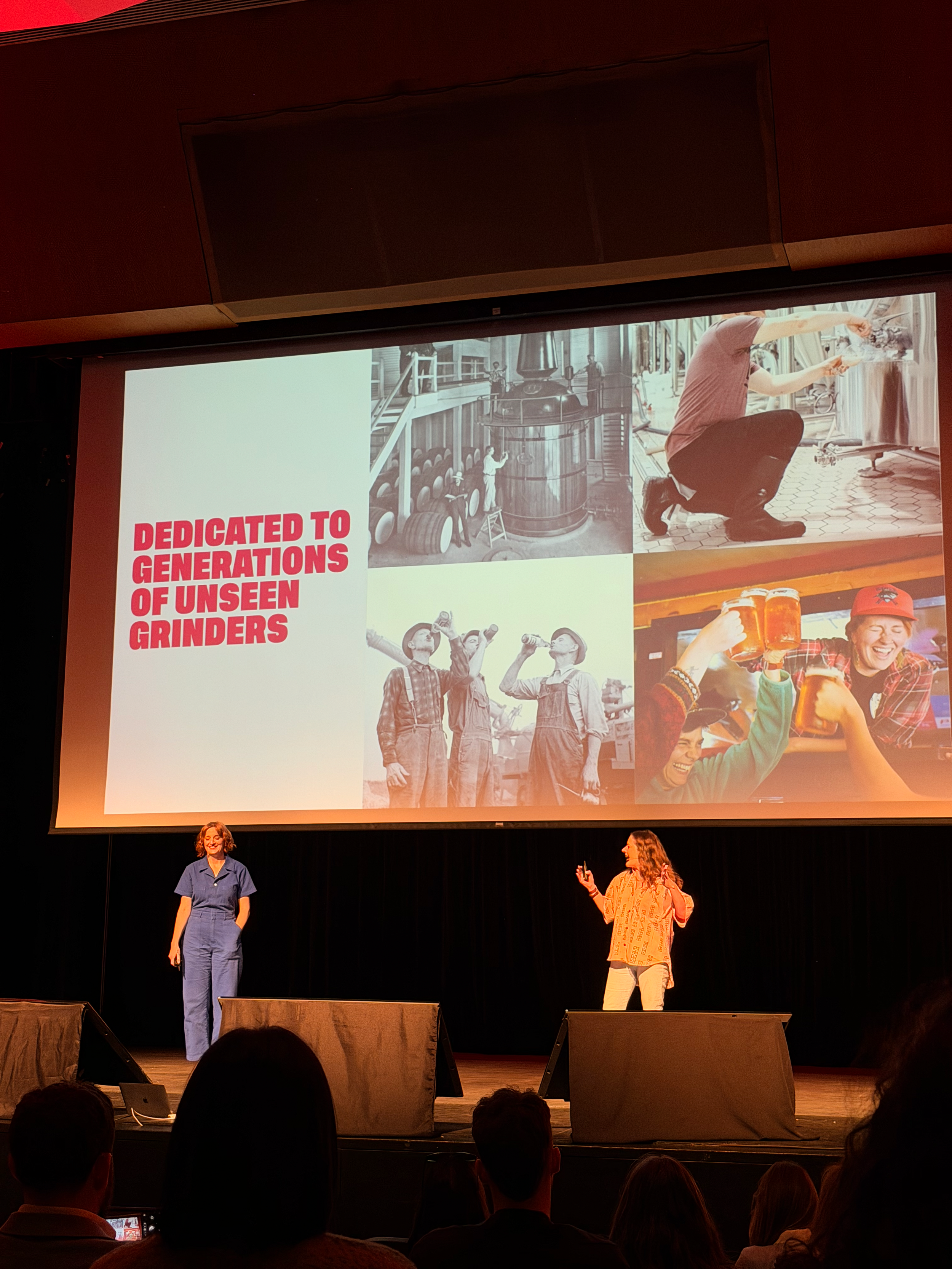
Sister Mary presenting Genesee Brewing.
Genesee Brewing is a legacy beer brand. Deep roots with real people of Pennsylvania. They understood something a lot of branding work gets wrong: the brand doesn't just belong to the founder or the marketing team.
It belongs to the people who've carried it. The customers who grew up with it. The staff who show up every day and make it real.
Genesee brought the community and the town of Rochester into the process. Not as a focus group. As collaborators. They found what the community already believed about the brand and built forward from there.
That's not soft thinking. That's strategic. Brands that try to leap too far from what people already feel don't fail because the design was bad. They fail because they left people behind.
The story is the strategy.
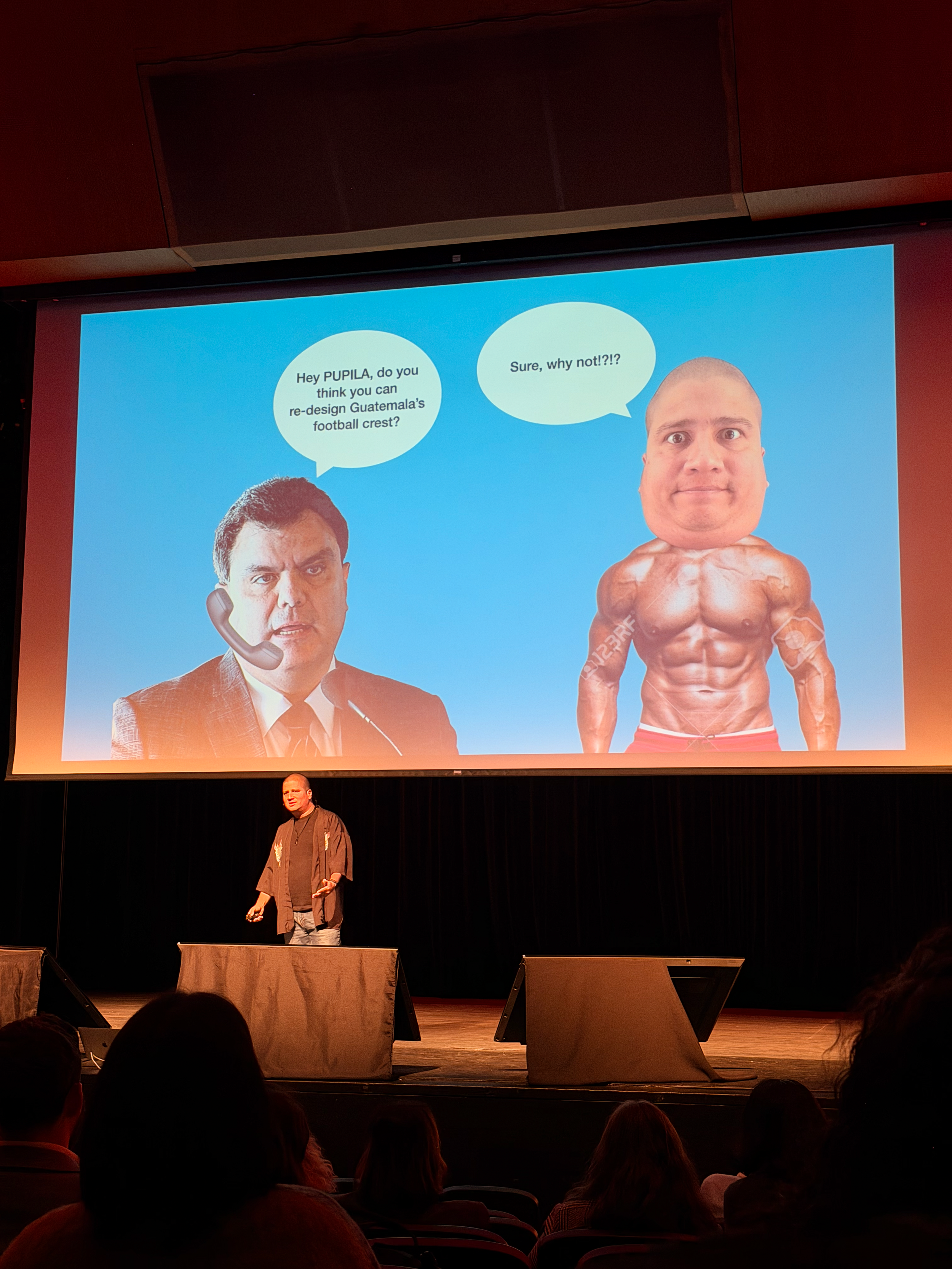
Alfredo Enciso and the Pupila team did the rebrand for Fedefut Guatemala, the national soccer federation. They went back. Way back. Mayan symbols. Deep cultural roots. Things that carried real meaning before the modern version of the organization even existed.
You can put any logo on a jersey. That's not hard.
What's hard is knowing why that mark means something. What it's connected to. What it says about where this thing came from and where it's going.
Knowing the why is what separates a visual from a brand. It's what gives you something to stand behind when the client second-guesses the direction or the market shifts.
Story is what survives.
Your brand lives in more places than you think.
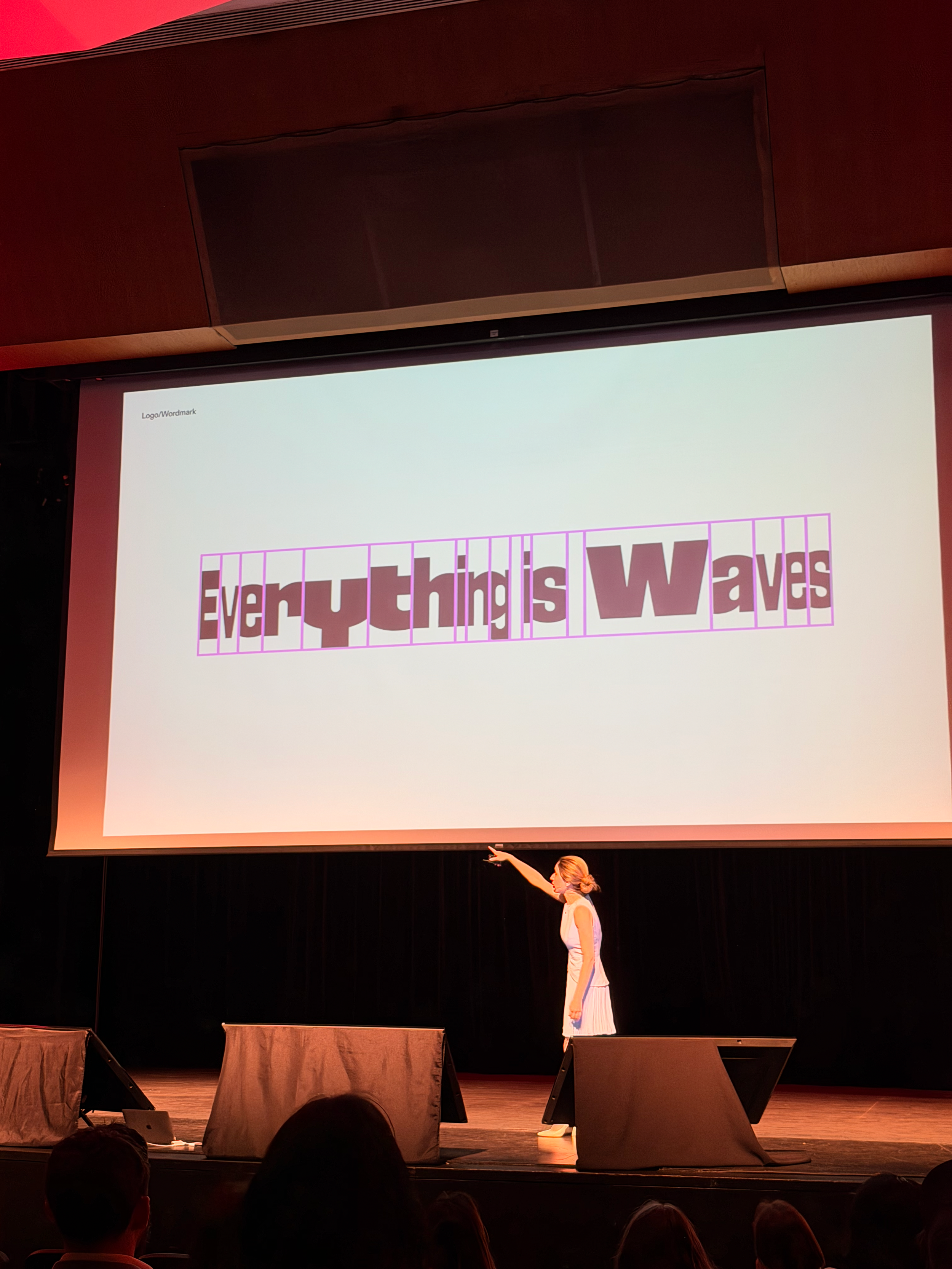
Talia Cotton presented Everything Is Waves. The logo's typeface was generative. It expands and contracts dynamically. It's alive. Most founders still think of branding as a logo and a few colors. A PDF. A style guide no one reads.
What happens when it moves, shifts, or reacts? People are now identifying a system and language that feels like a brand. The teams doing the most interesting work right now are thinking about brand as a system that moves. A design language that behaves differently across surfaces but always feels like the same thing.
That's not just a design innovation. It's a clarity innovation. When your brand is that coherent, people don't need to be told what you stand for or shown with an obvious logo translation. They feel it.
What I brought back to EightySeven.
I go to First Round because it sharpens something.
It's not trends. It's not inspiration in the traditional sense. It's watching colleagues solve hard problems with real constraints and real stakes.
The thread across all of it this year was conviction.
Not confidence for the sake of it. Real conviction rooted in research, in story, in understanding who the brand is for and what it means to those people. That's what the best brand work does.
It decides what a business is and then builds everything around that decision.
That's the kind of work I’m pursuing with EightySeven.
From what I saw last week, it’s encouraging to see that plenty of other people feel the same. Someday, I’m looking forward to being up on that stage, presenting a case study myself.
Worth the trip. Worth the attention. Worth the reminder of why this work matters.
If you've never been to First Round it's run by the incredible team at UnderConsideration, LLC. Thank you to Bryony Gomez-Palacio & Armin Vit for an amazing conference. See you in SF next year!
Thank you to all the amazing presenters: Emily Oberman, Léo Breton-Allaire & Ugo Varin Lachapelle, Miriam Frescura, Max Ottignon, Carlos Bocai, Amy Pastre & Courtney Rowson, Leigh Chandler & Emily Cristoforis, Robert Milam, Nadia Lung, Andy Chen & Waqas Jawaid, Talia Cotton, Alfredo Enciso
